

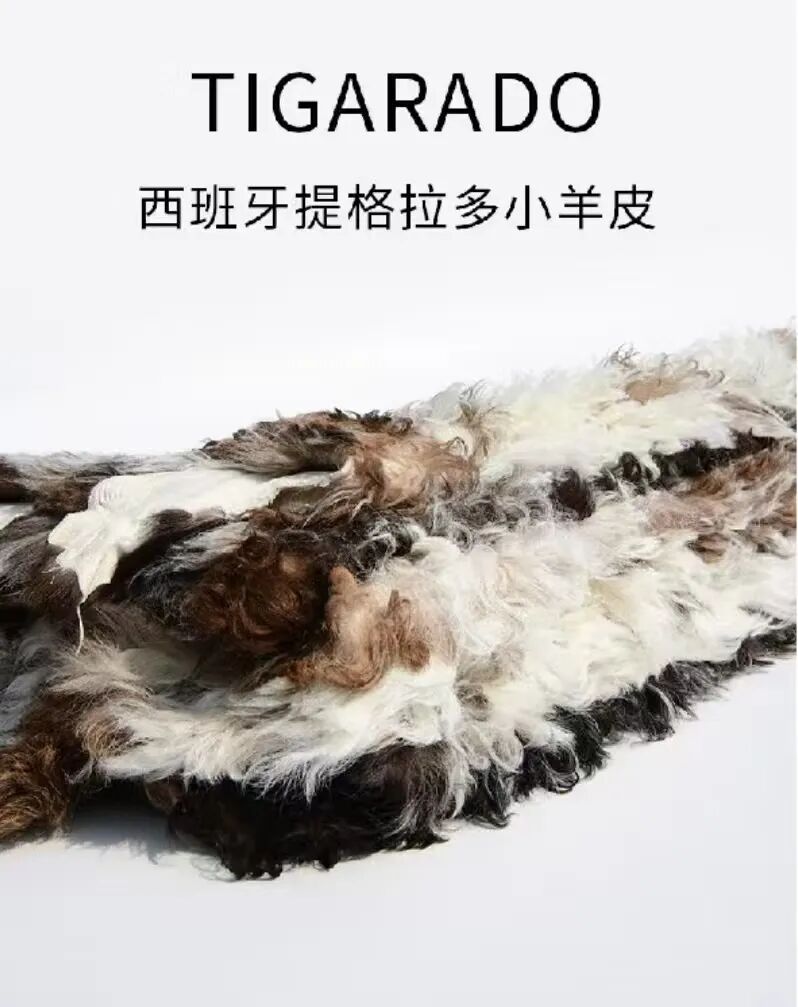
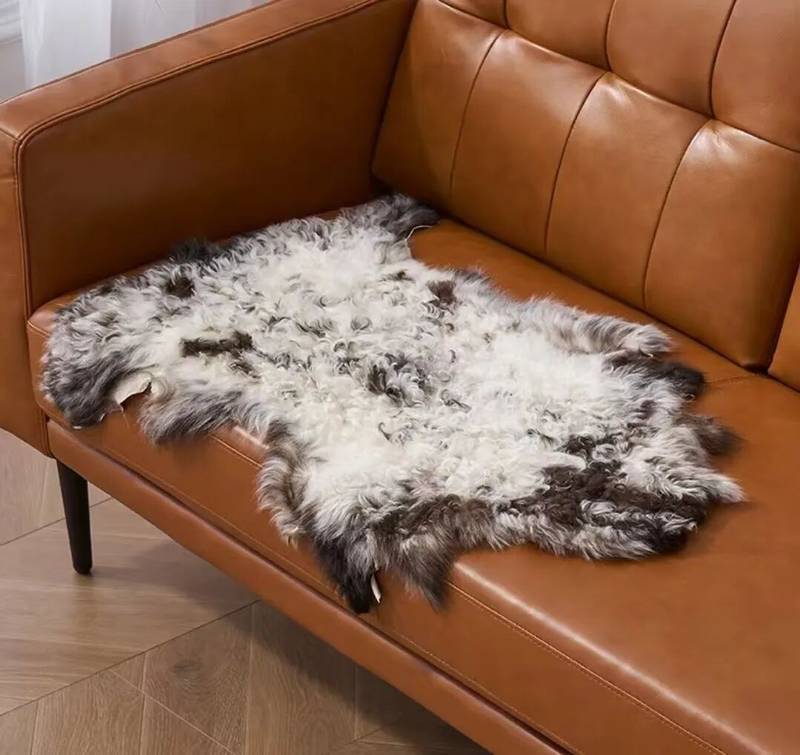
Tigrado is not a sheep breed name, but rather a distinctive sheepskin fabric from Spain. It's a popular retro curly fur category following Italian Tuscan (Toca) lineage.
Origin: Spanish pastures, using raw materials from the original hides and wool of lambs approximately 3 months old.
Name Explanation: Derived from the Spanish word "tigrado," meaning tiger stripes or speckled markings, corresponding to the fabric's natural mixed-color wool pattern.
Product Positioning: Mid-to-high-end specialty shearling, emphasizing a retro, relaxed sheepskin curl style.
I. Core Fabric Characteristics
- Curl Shape: The wool forms short, dense spiral curls, creating a fluffy and three-dimensional shape, reminiscent of Spanish short beard curls in the industry; its fluffiness rivals Tuscan shearling, and it doesn't easily flatten.
- Coat Color and Texture:The raw leather naturally features a mottled pattern, displaying irregular tiger stripes interwoven with dark brown, light brown, and black and white, making each pelt unique. It can also be dyed later to create solid colors such as pure gray, teddy brown, and black.
- Coat Structure:The outer layer is composed of long, curly guard hairs, while the inner layer is lined with a dense underfur, forming a double-layer structure. Compared to Lagon and Merino, the guard hairs are slightly coarser, but the underfur is soft and supple, preventing itching against the skin.
- Leather Characteristics:The leather is of medium to thick thickness, with excellent toughness and windproof performance. Due to the small size of lambs, the area of a single pelt is limited, requiring multiple pieces of leather to be pieced together when making garments, collars, and shoes; natural seams are a normal phenomenon.
II. Fabric Quality, Care Tips, and Purchasing Guide
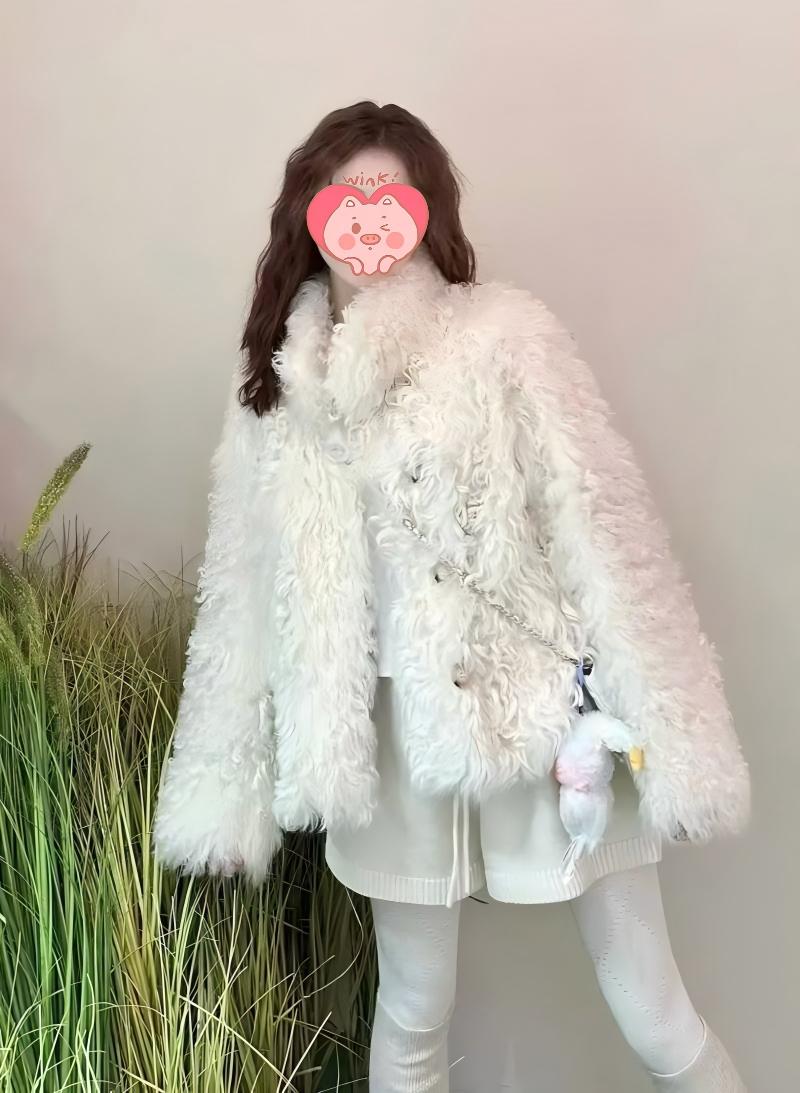

- Performance Advantages and Disadvantages
✅ Advantages
- Excellent heat retention: Long, curly fur traps air for efficient insulation; can be worn alone at -20°C; superior warmth compared to ordinary merino fur.
- High style recognition: Three-dimensional curly fur has a retro feel, suitable for making large coat lapels, shoe linings, and bag linings.
- Durable: Thick leather is not prone to cracking, and the curly fur is not prone to flattening; it does not easily show signs of wear with slight friction.
- Good breathability: The double-layered fur structure allows for air circulation, preventing stuffiness and sweating.
⚠️ Disadvantages
- The raw fur has a textured feel, but its ultimate softness is not as good as French lambskin.
- Single hides are small in size, requiring more splicing in the finished garment, resulting in greater material waste and higher production costs.
- The natural mixed floral pattern has a distinct visual character, limiting its compatibility with minimalist styles.
- The finished long coat is heavier than a thinner Tuscan merino fur coat.
- Wearing and Care Instructions
- Do not wash with water. For localized stains, gently wipe with a damp cloth. For deep cleaning, choose professional fur dry cleaning.
- Hang for storage, avoiding heavy objects to prevent permanent deformation of the fur curls.
- Store in a cool, well-ventilated wardrobe, protecting from moisture and insects, and away from heating and direct sunlight.
- Reduce long-term, repeated friction on cuffs, hems, etc., to slow down fur wear.
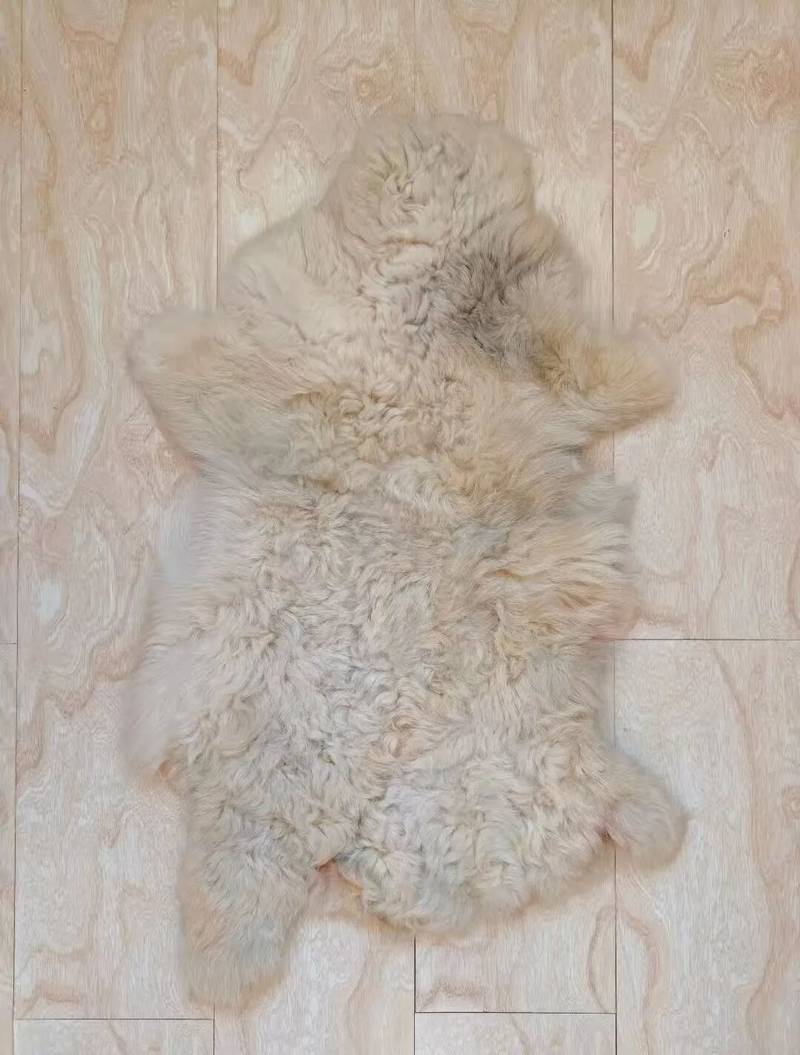
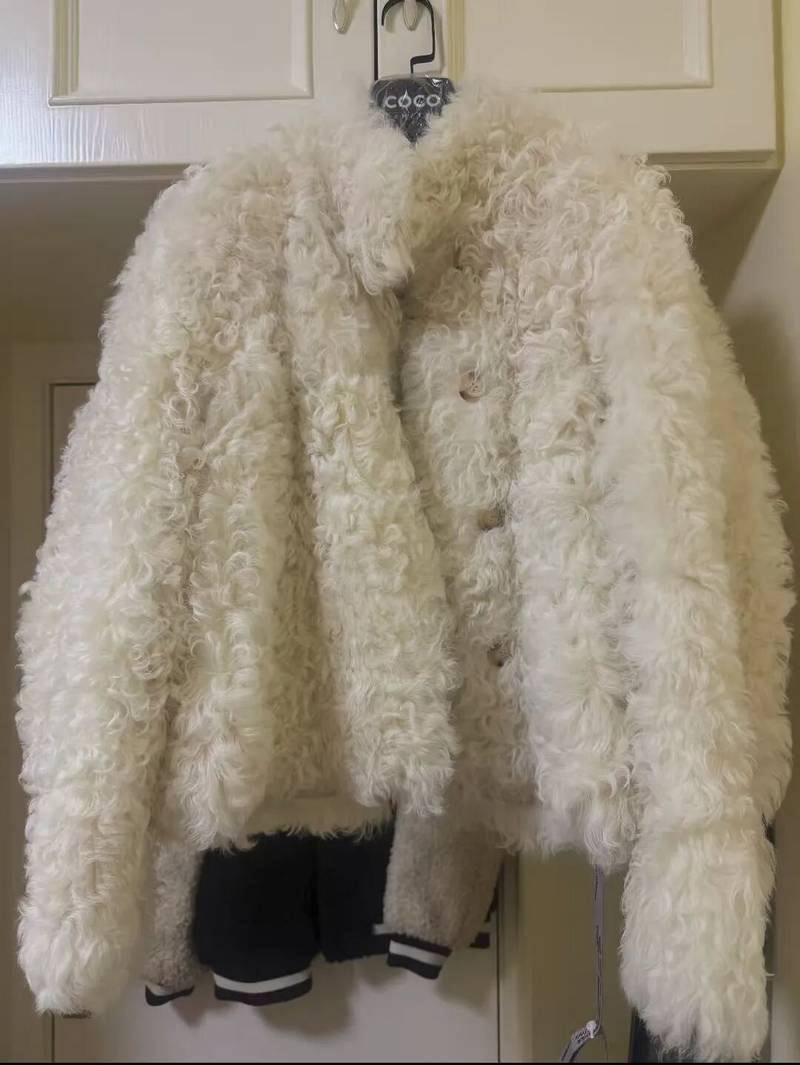
- Selection and Identification Techniques
- Genuine Tigrado leather has natural light and dark variegation; solid-color products with completely uniform overall color are generally dyed leather.
- Observe the fur curl shape: the standard feature is short, spiral curls, distinct from long, wavy curls.
- Examine the leather: fine sheepskin texture and multiple seams are natural characteristics of genuine products.
- Gently press the fur surface: rapid rebound and resistance to collapse indicate excellent leather quality.
III. Horizontal Comparison of Fabrics
Tigrado VS Tuscan (Toca). Both are vintage curly fur, commonly known as Western curls or Italian curls, and are the most easily confused categories in the market.
- Tigrado (Spain)
- Wool Curl: Fine, compact, short spiral curls with a strong granular texture and excellent support, resisting flattening even after prolonged wear;
- Touch: Clear hairline with a vintage textured surface and a soft, supple undercoat;
- Leather: Relatively thick with tight fibers, resistant to cold and tearing, and does not easily harden in low temperatures;
- Wearing Effect: Stiff silhouette, flattering for sloping shoulders, strong biker style in short coats, heavier in long coats;
- Color: Mostly natural tiger stripe and mixed colors, dyed versions have a vintage, muted tone;
- Durability: Strong hair roots prevent loosening, and the leather is resistant to hardening and cracking even after long-term wear.
- Tuscan (Italy)
- Wool Curls: Long, flowing waves with a loose, soft curl and minimal grain;
- Touch: Fine, soft, and smooth guard hairs, warm and gentle, without any rough texture;
- Leather: Thin, supple, and highly elastic, slightly hardening at low temperatures;
- Wearing Effect: Drapes beautifully and flows gracefully, lightweight and unburdening, suitable for long coats, creating a gentle and slimming style;
- Color: Primarily light beige or creamy white in its natural state, with few natural mixed patterns, and the dyeing process produces a translucent and soft effect;
- Durability: The long, curly hairs have shallow roots, making them prone to fraying due to frequent friction, and the curls may loosen over time.
Tigrado VS Lacon (High-End Lambskin). Both are high-end lambskin, the key difference being the presence or absence of stiff guard hairs.
- Tigrado
- Wool: Clearly defined double-layer structure with prominent guard hairs; the outer layer has a muscular feel.
- Touch: The outer layer has a grainy texture, while the underfur is soft, lacking a silky smooth feel.
- Leather: Thick and flat, without natural rib patterns; suitable for making leather garments, shoe materials, and double-sided leather; high processing tolerance.
- Source Cost: Stable production from Spanish ranches, ensuring ample raw material supply.
- Winter Protection: The outer layer provides stronger wind-locking; its warmth performance in windy conditions is superior to Laguna.
- Laguna
- Wool: No stiff guard hairs; full underfur structure, also known as "gunless lambskin"; extremely fine fibers.
- Touch: Overall, soft, silky, and smooth like a cloud; a benchmark for the feel of genuine leather.
- Leather: Thin and delicate, with natural rib patterns; prone to cracking; difficult to make large leather garments and shoes; does not support double-sided processing.
- Source Cost: Sourced from limited Alpine ranches; scarce production; extremely high garment wastage.
- Winter Protection: Excellent warmth in calm conditions; more prone to drafts in windy weather.
Tigrado VS Merino (Basic Goods) High-end retro fabrics are often marketed as mass-market commuter fabrics, a common example of misleading marketing.
- Tigrado:
- Fur type: Three-dimensional spiral curls, strong fluffiness, prominent fur texture;
- Fur roots: Deeply rooted, thick fur layer, uneven thickness is a natural characteristic;
- Leather: Original dark brown, thick leather, strong toughness, wear-resistant and bending-resistant;
- Dyeing characteristics: Unique original mixed colors, strong dye adhesion, not easy to fade.
- Merino:
- Fur type: Straight or slightly curly, smooth matte surface, no three-dimensional grain, simple and simple style;
- Fur roots: Even and thin fur layer, standardized breeding, uniform leather specifications;
- Leather: Light white thin leather, moderate toughness, prone to cracking with repeated bending over a long period of time;
- Dyeing characteristics: Very easy to dye, even and clean color, the vast majority of affordable solid-color fur-lined leather on the market is made of Merino.
