

When choosing a sofa for your living room, leather sofas are always a top choice for aesthetics. However, most consumers have encountered the same problem: after removing the protective film from a new sofa, a strong odor hits you, and even after two or three months of ventilation, the odor persists.
Many merchants will give the same explanation: genuine leather naturally has a smell, and ventilation will dissipate it. However, many families experience discomfort such as dry and itchy throats and sore eyes after ventilating for up to six months, realizing that simple ventilation is not enough. Based on experience in the upholstered furniture industry, we will teach you how to distinguish between normal leather fragrance and harmful chemical odors, avoiding environmental hazards.

Distinguish Between Two Scents: Natural Leather Scent and Harmful Pungent Odors
Processed natural leather will have a faint oily fragrance, similar to the factory smell of brand new leather clothing and bags, which is the normal smell of the material itself. This smell is not irritating and will noticeably fade and dissipate after 3-5 days of ventilation, a normal characteristic of genuine leather.
A persistent plastic, fishy, or pungent chemical smell is not a natural odor of leather and indicates excessive levels of chemical additives, primarily from three sources:
- Excessive solvents in the coating: Some manufacturers use excessive amounts of coatings and color-fixing agents to cover up leather imperfections. These solvents release volatile compounds such as benzene and formaldehyde, which can damage the respiratory system with prolonged inhalation.
- Inferior sponges and glues causing cumulative pollution: The sponges filling the sofa and the glue used to bond the frame release TVOCs (Total Volatile Organic Compounds), which mix with the leather smell and amplify the odor. Formaldehyde release can last for 3-15 years.
- Improper tanning processes resulting in chemical residues.
Simple three-step self-test method to quickly distinguish between high-quality leather and problematic products:
- Step 1: Remove the protective film and smell for 3 seconds.
High-quality leather emits a faint, natural oily fragrance. If you smell a plastic, fishy, or sour odor with a strong, pungent odor, it is recommended to refuse the product immediately.
- Step 2: Warm up in your palm for 10 seconds.
Press your palms firmly against the leather surface for 10 seconds; body heat will accelerate the release of the odor. High-quality leather retains a mild, oily scent; contaminated leather develops a stronger, more pungent chemical odor when heated.
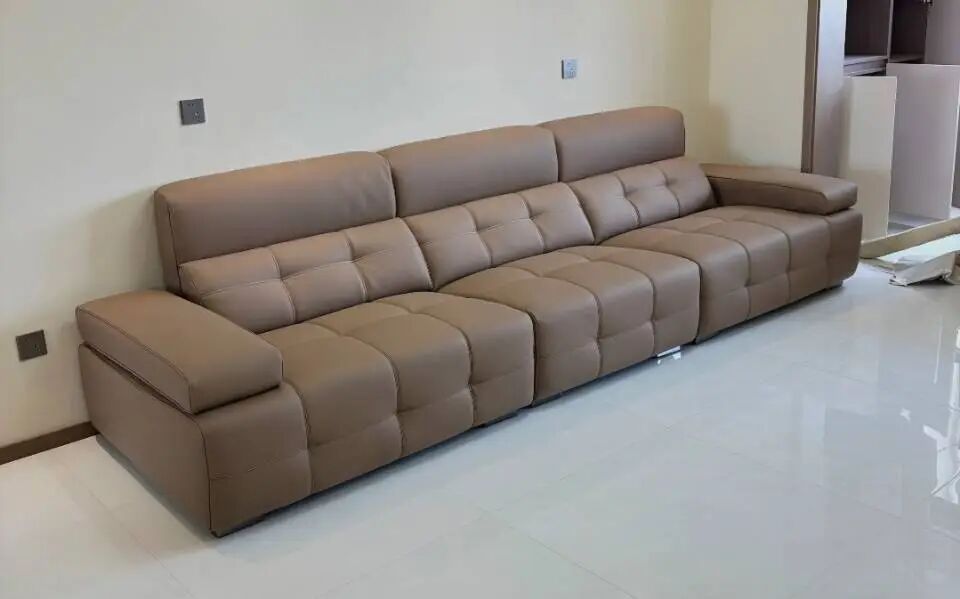
Note: Odor is only a supplementary method of identification and cannot completely replace professional testing. If a leather sofa has a persistent, irritating odor after purchase, and family members frequently experience health problems, it is recommended to have indoor air quality tested.
