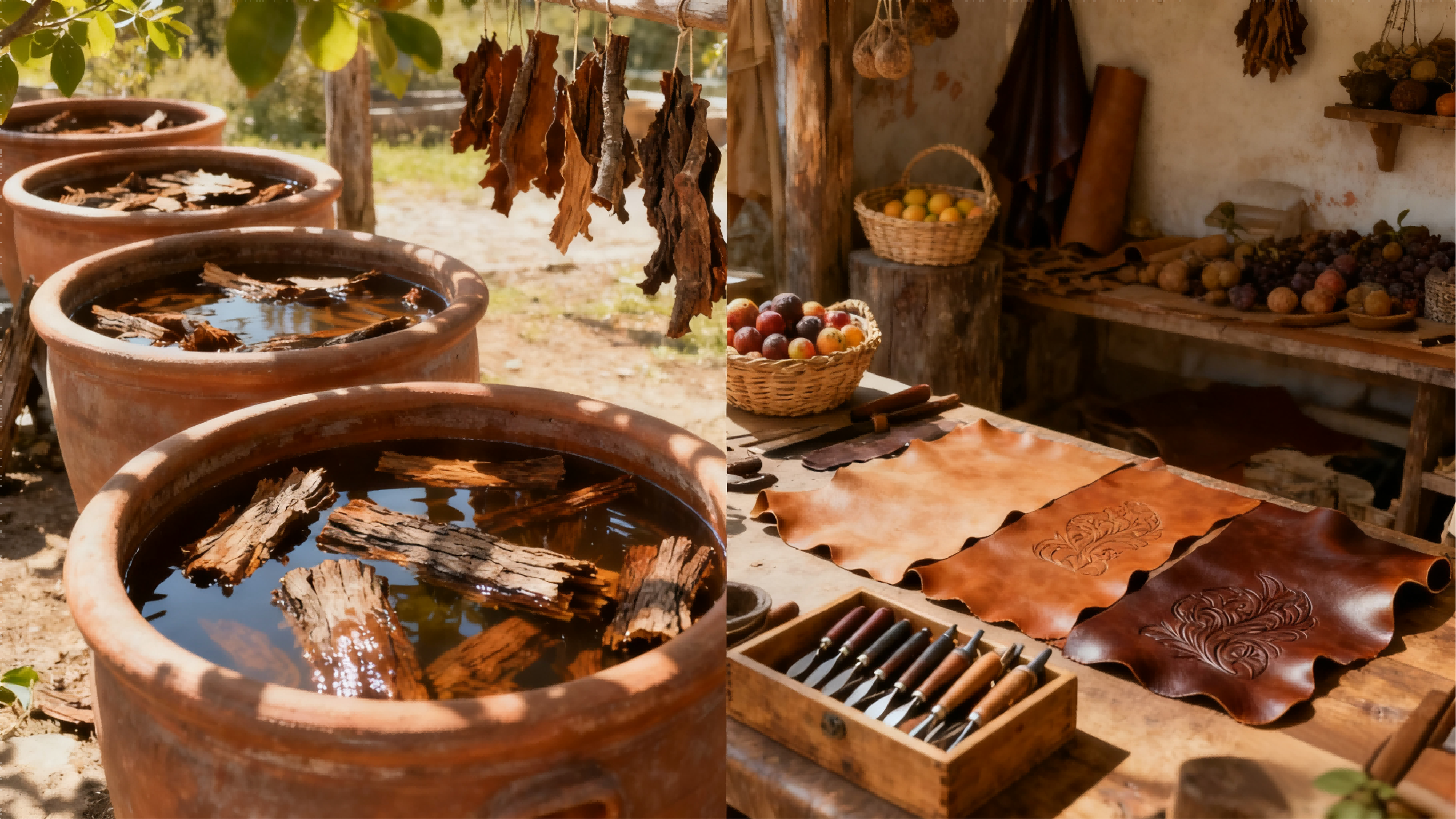
While chemical tanning dominates the market, vegetable-tanned leather, an ancient leather craft, is regaining favor among craft enthusiasts and those seeking a quality lifestyle for its natural, eco-friendly properties and unique "vitality." This tanning method, centered around plant tannins, not only carries millennia of leathermaking wisdom but has also become a representative material for modern sustainable living.
The core of vegetable-tanned leather lies in "vegetable tannins." Plant tissues meeting industrial tanning standards must contain ≥8% tannic acid, and common sources include trees, bark, fruit, and rhizomes. For example, woods such as quebracho and chestnut, wattle and larch bark, nutshells such as oak bowls and tara, and plant parts such as red root and lacquer leaves are all commonly used natural tannins in traditional vegetable tanning, ensuring the natural properties of the material from the source.
Compared to mainstream chrome-tanned leather, vegetable-tanned leather's advantages lie in its environmental health, unique texture, and color-preserving properties. From an environmental perspective, plant tannins are harmless to the human body, and the environmental pollution from the production process and discarded leather is far lower than that from chemical chromium tanning. It is particularly suitable for items that come into direct contact with the skin, such as wallets, watchbands, and jewelry, and can even be used in some food-related utensils. In terms of texture, undyed vegetable-tanned leather is often pale yellow, light brown, or pale pink. Its fibers are dense, stiff, and supportive, and its plasticity when wet makes it an ideal canvas for leather carving. Once dry, it retains its shape and gradually softens with use without sagging.
Vegetable-tanned leather's most attractive feature is its ability to "breathe" and maintain its color. Under the influence of sunlight, air, and human oils, natural vegetable-tanned leather gradually transforms from a light color to a honey-colored or even dark brown, forming a unique patina. Frequent handling and use develop a soft, lustrous luster. Scratches and water stains left by daily use are not flaws, but rather personal marks that record the owner's life, making each vegetable-tanned leather product unique. Today, vegetable-tanned leather's applications have expanded beyond traditional fields into many aspects of modern life. In the art of handmade leather goods, it's the preferred choice for enthusiasts crafting wallets, card holders, and handbags. In leather carving, its excellent plasticity makes it a core material. Some luxury brands, such as HERMÈS's classic styles, also use high-quality vegetable-tanned leather to enhance its quality. Furthermore, products like saddlery, shoe soles, belts, and bracelets offer the user the pleasure of "nurturing" leather.
It's important to note that vegetable-tanned leather care must adhere to its natural properties: avoid contact with water and oil. If accidentally stained, blot dry and allow it to air dry. Avoid prolonged exposure to the sun to prevent drying and brittleness. Clean daily with a slightly damp soft cloth; use a specialized cleaner for stubborn stains. Regular conditioning with neatsfoot oil or horse oil can prevent cracking, but be aware that oiling can accelerate discoloration.
From ancient production tools to modern statement pieces, vegetable-tanned leather has transcended the definition of "material" to become a lifelong companion that carries emotions. It does not pursue perfection, but with the unique mark given by time, it connects the deep emotions between users and objects, and provides a natural choice for people who pursue sustainable and personalized life.